Found this article month ago but I forgot to post it here. This article is damn useful for me. For those who lazy to read, just read the highlighted one, ok.
People who struggle with insomnia appear to be more prone to heart attacks than those who typically get a good night's sleep, a large Norwegian study has found.
In the study, published Monday in the American Heart Association journal Circulation, researchers conducted a comprehensive health survey of more than 52,000 adults, which included questions about sleep quality. Over the next 11 years, roughly 5% of the participants had a heart attack for the first time.
Compared to solid sleepers, those who had trouble falling or staying asleep nearly every night were 45% and 30% more likely to have a heart attack, respectively, even after the researchers took into account age, blood pressure, cholesterol levels, and other factors that can contribute to heart disease. People who reported feeling tired or unrefreshed after waking up at least two mornings per week were also at greater risk.
LIST: The Worst Habits for Your Heart
"Cardiologists do not talk regularly about sleep issues with their patients," says lead researcher Dr. Lars Erik Laugsand, an internist in the public health department of the Norwegian University of Science and Technology, in Trondheim. Although he and his coauthors suggest that these conversations may be helpful for assessing heart disease risk, Dr. Laugsand says that further research will be needed to determine how insomnia might affect heart health, and whether treating sleep problems can actually prevent heart attacks.
Cardiologist Suzanne Steinbaum, who directs the Women and Heart Disease program at Lenox Hill Hospital, in New York City, agrees that more research in this area is needed, but she says she already discusses sleep issues with her patients. Stress reduction is a key to preventing heart attacks, she says, and lowering stress is all but impossible if you're not getting enough sleep.
"We don't know how significant the sleep disturbance must be, or how long it must persist for it to become significant for heart disease," Steinbaum says. "But it is safe to say that there is some correlation."
LIST: Surprising Heart Attack Risks
Stress, depression and other psychological problems often overlap with sleep difficulties. Dr. Laugsand and his colleagues did factor depression and anxiety symptoms into their analysis, but neither condition had a substantial impact on the results. Other factors involving metabolism or blood-vessel health — such as inflammation — may be involved in the apparent link between insomnia and heart disease, the study notes.
Insomnia is the most common sleep problem in the United States. Roughly one-third of Americans experience occasional symptoms, and nearly 10% say they have chronic insomnia, according to the National Center on Sleep Disorders Research. Insomnia tends to occur more frequently with age, and some studies suggest it may be more prevalent in women.
Although insomnia is common, adequate and lasting treatment for it is not, says Susan Zafarlotfi, clinical director of the Institute for Sleep-Wake Disorders at Hackensack University, in Hackensack, N.J. "Clinicians often simply medicate their patients, but that is not the way to do it," she says. "Pharmacology is only for the short term. They need to get at the depth of the problem."
LIST: 7 Tips for the Best Sleep Ever
Previous research has reported a higher risk of heart attack among people with insomnia, but the new study is among the largest of its kind. It should be an eye-opener for cardiologists as well as for neurologists and doctors of all kinds, Zafarlotfi says, adding that future research is likely to strengthen the link between insomnia, heart disease, and related conditions such as stroke. "They have to ask their patients about sleep," she says. "Sleep has to be a big part of working with patients."
Showing posts with label Health. Show all posts
Showing posts with label Health. Show all posts
Tuesday, November 22, 2011

Saturday, June 4, 2011
A great testimony from Lee Kuan Yew on age-ing

Singapore Minister Mentor Lee Kuan Yew
This is Minister Mentor Lee Kuan Yew's advice on ageing the best way one
can. Yesterday, he shared some personal insights into how he himself deals
with ageing. Here is the transcript of his remarks.
MY CONCERN today is, what is it I can tell you which can add to your knowledge about ageing and what ageing societies can do. You know more about this subject than I do. A lot of it is out in the media, Internet and books. So I thought the best way would be to take a personal standpoint and tell you how I approach this question of ageing.
If I cast my mind back, I can see turning points in my physical and mental
health. You know, when you're young, I didn't bother, I assumed good health
was God-given and would always be there. When I was about
- '57 that was - I was about 34, we were competing in elections, and I was
really fond of drinking beer and smoking.
And after the election campaign, in Victoria Memorial Hall - we had won the
election, the City Council election - I couldn't thank the voters because I
had lost my voice. I'd been smoking furiously.
I'd take a packet of 10 to deceive myself, but I'd run through the packet
just sitting on the stage, watching the crowd, getting the feeling, the mood
before I speak. In other words, there were three speeches a night. Three
speeches a night, 30 cigarettes, a lot of beer after that, and the voice was
gone.
I remember I had a case in Kuching, Sarawak. So I took the flight and I felt
awful. I had to make up my mind whether I was going to be an effective
campaigner and a lawyer, in which case I cannot destroy my voice, and I
can't go on. So I stopped smoking. It was a tremendous deprivation because I
was addicted to it.
And I used to wake up dreaming...the nightmare was I resumed smoking.
But I made a choice and said, if I continue this, I will not be able to do
my job. I didn't know anything about cancer of the throat or oesophagus or
the lungs, etc. But it turned out it had many other deleterious effects.
Strangely enough after that, I became very allergic, hyper-allergic to
smoking, so much so that I would plead with my Cabinet ministers not to
smoke in the Cabinet room. You want to smoke, please go out, because I am
allergic.
Then one day I was at the home of my colleague, Mr Rajaratnam, meeting
foreign correspondents including some from the London Times and they took a
picture of me and I had a big belly like that (puts his hands in front of
his belly), a beer belly. I felt no, no, this will not do.
So I started playing more golf, hit hundreds of balls on the practice tee.
But this didn't go down. There was only one way it could go down: consume
less, burn up more.
Another turning point came when -this was 1976, after the general election -
I was feeling tired. I was breathing deeply at the Istana, on the lawns. My
daughter, who at that time just graduating as a doctor, said: 'What are you
trying to do?' I said: 'I feel an effort to breathe in more oxygen.' She
said:
'Don't play golf. Run. Aerobics.'
So she gave me a book, quite a famous book and, then, very current in
America on how you score aerobic points swimming, running, whatever it is,
cycling. I looked at it sceptically. I wasn't very keen on running. I was
keen on golf. So I said, 'Let's try'.
So in-between golf shots while playing on my own, sometimes nine holes at
the Istana, I would try and walk fast between shots. Then I began to run
between shots. And I felt better. After a while, I said:
'Okay, after my golf, I run.' And after a few years, I
said: 'Golf takes so long. The running takes 15 minutes. Let's cut out the
golf and let's run.'
I think the most important thing in ageing is you got to understand
yourself. And the knowledge now is all there. When I was growing up, the
knowledge wasn't there. I had to get the knowledge from friends, from
doctors.
But perhaps the most important bit of knowledge that the doctor gave me was
one day, when I said: 'Look, I'm feeling slower and sluggish.' So he gave me
a medical encyclopaedia and he turned the pages to ageing. I read it up and
it was illuminating. A lot of it was difficult jargon but I just skimmed
through to get the gist of it.
As you grow, you reach 20, 21, 22, 23, 24, 25 and then, thereafter, you are
on a gradual slope down physically. Mentally, you carry on and on and on
until I don't know what age, but mathematicians will tell you that they know
their best output is when they're in their 20s and 30s when your mental
energy is powerful and you haven't lost many neurons. That's what they tell
me.
So, as you acquire more knowledge, you then craft a programme for yourself
to maximise what you have. It's just common sense. I never planned to live
till 85 or 84. I just didn't think about it. I said: 'Well, my mother died
when she was 74, she had a stroke. My father died when he was 94.'
But I saw him, and he lived a long life, well, maybe it was his DNA. But
more than that, he swam every day and he kept himself busy. He was working
for the Shell company. He was in charge, he was a superintendent of an oil
depot. When he retired, he started becoming a salesman. So people used to
tell me: 'Your father is selling watches at BP de Silva.'
My father was then living with me. But it kept him busy. He had that
routine: He meets people, he sells watches, he buys and sells all kinds of
semi-precious stones, he circulates coins. And he keeps going.
But at 87, 88, he fell, going down the steps from his room to the dining
room, broke his arm, three months incapacitated. Thereafter, he couldn't go
back to swimming.
Then he became wheelchair-bound. Then it became a problem because my house
was constructed that way. So my brother - who's a doctor and had a flat
(one-level) house - took him in. And he lived on till 94. But towards the
end, he had gradual loss of mental powers.
So my calculations, I'm somewhere between 74 and 94.
And I've reached the halfway point now. But have I?
Well, 1996 when I was 73, I was cycling and I felt tightening on the neck.
Oh, I must retire today. So I stopped. Next day, I returned to the bicycle.
After five minutes it became worse.
So I said, no, no, this is something serious, it's got to do with the blood
vessels. Rung up my doctor, who said, 'Come tomorrow'. Went tomorrow, he
checked me, and said: 'Come back tomorrow for an angiogram.' I
said: 'What's that?' He said: 'We'll pump something in and we'll see whether
the coronary arteries are cleared or blocked.'
I was going to go home. But an MP who was a cardiologist happened to be
around, so he came in and
said: 'What are you doing here?' I said: 'I've got this.' He said: 'Don't go
home. You stay here tonight.
I've sent patients home and they never came back. Just stay here. They'll
put you on the monitor. They'll watch your heart. And if anything, an
emergency arises, they will take you straight to the theatre.
You go home. You've got no such monitor. You may never come back.'
So I stayed there. Pumped in the dye, yes it was blocked, the left
circumflex, not the critical, lead one. So that's lucky for me.
Two weeks later, I was walking around,I felt it's coming back. Yes it has
come back, it had occluded. So this time they said: 'We'll put in a stent.'
I'm one of the first few in Singapore to have the stent, so it was a brand
new operation. Fortunately, the man who invented the stent was out here
selling his stent.
He was from San Jose, La Jolla something or the other.
So my doctor got hold of him and he supervised the operation. He said put
the stent in. My doctor did the operation, he just watched it all and then
that's that. That was before all this problem about lining the stent to make
sure that it doesn't occlude and create a disturbance.
So at each stage, I learnt something more about myself and I stored that. I
said: 'Oh, this is now a danger point.'
So all right, cut out fats, change diet, went to see a specialist in Boston,
Massachusetts General Hospital.
He said: 'Take statins.' I said: 'What's that?' He
said: '(They) help to reduce your cholesterol.'
My doctors were concerned. They said: 'You don't need it. Your cholesterol
levels are okay.' Two years later, more medical evidence came out. So the
doctors said: 'Take statins.'
Had there been no angioplasty, had I not known that something was up and I
cycled on, I might have gone at
74 like my mother. So I missed that deadline.
So next deadline: my father's fall at 87.
I'm very careful now because sometimes when I turn around too fast, I feel
as if I'm going to get off balance. So my daughter, a neurologist, she took
me to the NNI, there's this nerve conduction test, put electrodes here and
there.
The transmission of the messages between the feet and the brain has slowed
down.
So all the exercise, everything, effort put in, I'm fit, I swim, I cycle.
But I can't prevent this losing of conductivity of the nerves and this
transmission.
So just go slow.
So when I climb up the steps, I have no problem. When I go down the steps, I
need to be sure that I've got something I can hang on to, just in case. So
it's a constant process of adjustment.
But I think the most important single lesson I learnt in life was that if
you isolate yourself, you're done for. The human being is a social animal -
he needs stimuli, he needs to meet people, to catch up with the world.
I don't much like travel but I travel very frequently despite the jet lag,
because I get to meet people of great interest to me, who will help me in my
work as chairman of our GIC. So I know, I'm on several boards of banks,
international advisory boards of banks, of oil companies and so on.
And I meet them and I get to understand what's happening in the world, what
has changed since I was here one month ago, one year ago. I go to India, I
go to China.
And that stimuli brings me to the world of today. I'm not living in the
world, when I was active, more active 20, 30 years ago. So I tell my wife.
She woke up late today. I said: 'Never mind, you come along by
12 o'clock. I go first.'
If you sit back - because part of the ending part of the encyclopaedia which
I read was very depressing - as you get old, you withdraw from everything
and then all you will have is your bedroom and the photographs and the
furniture that you know, and that's your world. So if you've got to go to
hospital, the doctor advises you to bring some photographs so that you'll
know you're not lost in a different world, that this is like your bedroom.
I'm determined that I will not, as long as I can, to be reduced, to have my
horizons closed on me like that. It is the stimuli, it is the constant
interaction with people across the world that keeps me aware and alive to
what's going on and what we can do to adjust to this different world.
In other words, you must have an interest in life. If you believe that at
55, you're retiring, you're going to read books, play golf and drink wine,
then I think you're done for. So statistically they will show you that all
the people who retire and lead sedentary lives, the pensioners die off very
quickly.
So we now have a social problem with medical sciences, new procedures, new
drugs, many more people are going to live long lives. If the mindset is that
when I reach retirement age 62, I'm old, I can't work anymore, I don't have
to work, I just sit back, now is the time I'll enjoy life, I think you're
making the biggest mistake of your life.
After one month, or after two months, even if you go travelling with nothing
to do, with no purpose in life, you will just degrade, you'll go to seed.
The human being needs a challenge, and my advice to every person in
Singapore and elsewhere: Keep yourself interested, have a challenge.
If you're not interested in the world and the world is not interested in
you, the biggest punishment a man can receive is total isolation in a
dungeon, black and complete withdrawal of all stimuli, that's real torture.
So when I read that people believe, Singaporeans say:
'Oh, 62 I'm retiring.' I say to them: 'You really want to die quickly?' If
you want to see sunrise tomorrow or sunset, you must have a reason, you must
have the stimuli to keep going.'
This story was first published on Jan 12, 2008.
Saturday, April 23, 2011
The Top Five Cancer-Causing Foods
Here is another post about Cancer-causing Foods. Eat smart, Eat healthily.
Live Life Without Limits! AND PASS THIS EMAIL TO WHOM YOU CARE The top five cancer-causing foods are:

1. Hot dogs
Because they are high in nitrates, the Cancer Prevention Coalition advises that children eat no more than 12 hot dogs a month. If you can't live without hot dogs, buy those made without sodium nitrate.
Because they are high in nitrates, the Cancer Prevention Coalition advises that children eat no more than 12 hot dogs a month. If you can't live without hot dogs, buy those made without sodium nitrate.

2. Processed meats and bacon
Also high in the same sodium nitrates found in hot dogs, bacon, and other processed meats raise the risk of heart disease. The saturated fat in bacon also contributes to cancer.
Also high in the same sodium nitrates found in hot dogs, bacon, and other processed meats raise the risk of heart disease. The saturated fat in bacon also contributes to cancer.

3. Doughnuts
Doughnuts are cancer-causing double trouble. First, they are made with white flour, sugar, and hydrogenated oils, then fried at high temperatures. Doughnuts, says Adams , may be the worst food you can possibly eat to raise your risk of cancer.
Doughnuts are cancer-causing double trouble. First, they are made with white flour, sugar, and hydrogenated oils, then fried at high temperatures. Doughnuts, says Adams , may be the worst food you can possibly eat to raise your risk of cancer.

4. French fries
Like doughnuts, French fries are made with hydrogenated oils and then fried at high temperatures. They also contain cancer- causing acryl amides which occur during the frying process. They should be called cancer fries, not French fries, said Adams .
Like doughnuts, French fries are made with hydrogenated oils and then fried at high temperatures. They also contain cancer- causing acryl amides which occur during the frying process. They should be called cancer fries, not French fries, said Adams .

5. Chips, crackers, and cookies
All are usually made with white flour and sugar. Even the ones whose labels claim to be free of trans-fats generally contain small amounts of trans-fats.
All are usually made with white flour and sugar. Even the ones whose labels claim to be free of trans-fats generally contain small amounts of trans-fats.
Author : Unknown
Wednesday, October 6, 2010
For every computer user (CARPAL TUNNEL SYNDROME) !
I received one of the email about Carpal Tunnel Syndrome. Sorry to say, I am not an expert for the medical field. Again, I search Wiki and I found what is it.
Don't understand ? Me too ! Cut it short, for everyone who works daily on computer. The mistakes daily mouse and keyboard usage will result in Carpal Tunnel Syndrome! ( Believe or not, up to you...)
View for the correct techniques...

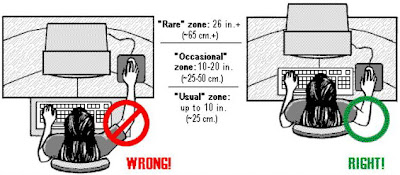


Hand Exercises for Carpal Tunnel Syndrome :


USE THE MOUSE AND KEYBOARD CORRECTLY. PLAY SAFE !!!
FORWARD TO EVERYONE YOU CARE.
"Carpal Tunnel Syndrome (CTS) is associated by symptoms and signs, which are caused by compression of the median nerve travelling through the carpal tunnel.[1] Carpal Tunnel Syndrome affects the hands since it is an upper limb neuropathy that results in motor and sensory disturbance of the median nerve".
Source : http://en.wikipedia.org/wiki/Carpal_tunnel_syndrome
Don't understand ? Me too ! Cut it short, for everyone who works daily on computer. The mistakes daily mouse and keyboard usage will result in Carpal Tunnel Syndrome! ( Believe or not, up to you...)
View for the correct techniques...


Hand Exercises for Carpal Tunnel Syndrome :


USE THE MOUSE AND KEYBOARD CORRECTLY. PLAY SAFE !!!
FORWARD TO EVERYONE YOU CARE.
Subscribe to:
Posts (Atom)